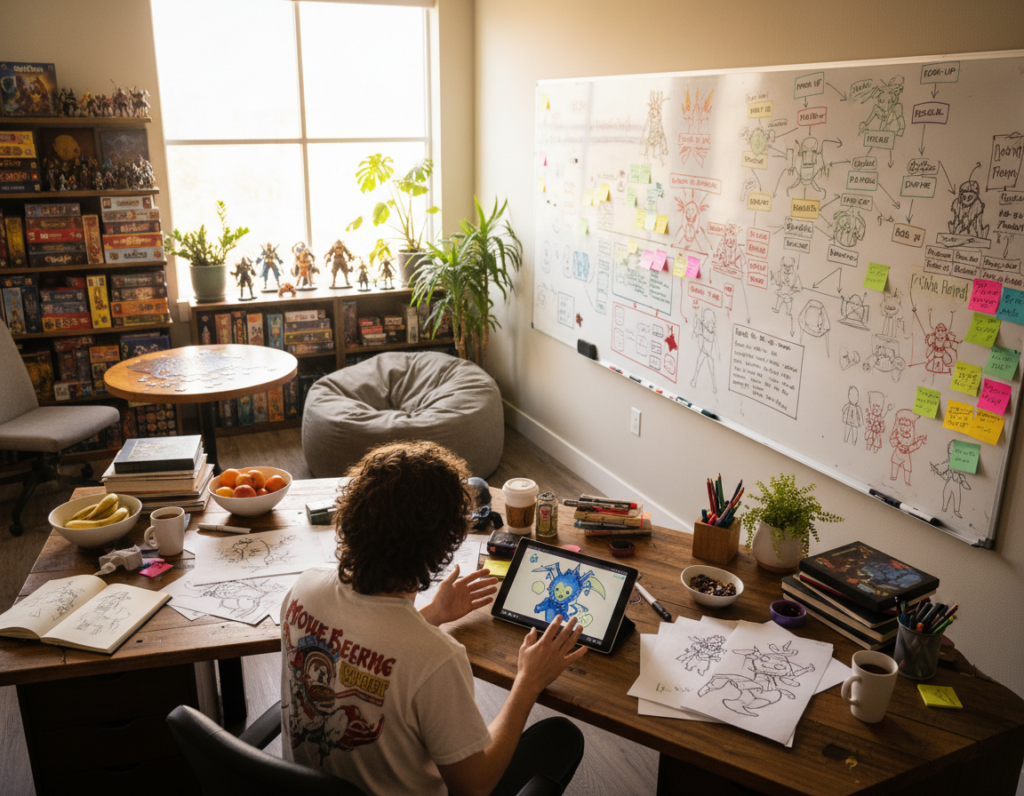
He left Lucasfilm after years in a studio that often put graphics over play. Then he shifted to independent projects to follow a different mindset. The move focused attention on the simple things that make a game fun.
Successful creators learned to treat each part as a purpose. They asked how mechanics, rules, and characters feed the player’s experience. Small choices in a place or level can change how people feel while they play.
They spent time refining systems but kept the core idea simple. By studying other games, the developer found the challenges and goals that shaped the new environment. This process taught him to balance structure and surprise.
The result was a clear set of rules that guided the player from day one. With an open head and steady process, a single good idea became a living place that invited players to explore and return.
Defining Your Core Philosophy
A compact philosophy helps a developer decide what to keep and what to cut. It gives a steady point of reference when choices pile up and time runs short.
Following the Fun
The team studies titles that nailed pure play. DOOM (2016) is an example: mechanics like Glory Kills create a loop of constant, satisfying action. That loop shows how one small rule can drive the whole experience.
Making What You Love
Passion matters: creators must name the things they truly love. This clarity keeps people motivated during long days and guides world building choices.
“If core mechanics are fun on their own, the project survives changes and trims.”
- Write down goals to keep a clear head.
- Analyze why games resonate with you and adapt those lessons.
- Prefer singular, strong mechanics over many weak systems.
Mastering Indie Game World Design
Mastering a compact, playable environment starts with stripping systems down to what truly matters.
The author used Vendetta Forever to prove that narrative and graphical bloat can be removed while keeping success. That project shows how clear mechanics let every player feel the core loop.
Focus on one part at a time: pick a rule, refine it, then test. Small, purposeful changes improve the whole experience.
“If mechanics and setting line up, the player senses a seamless place to explore.”
The process often asks creators to break away from industry norms and try new ways. Use grounded characters and coherent places so the path feels real and rewarding.
- Balance complex systems with simple, fun mechanics.
- Trim excess stuff so the core play shines.
- Analyze others’ challenges to avoid common pitfalls.
- Experiment, then commit to the best choice.
Finding Inspiration in Everyday Environments
Everyday rooms often hide the sparks that turn small ideas into memorable levels. A short, focused look at a kitchen, an arcade, or a living room can suggest simple rules, hazards, and routes that feel believable.
The developers of Vendetta Forever, available on Meta Quest and PS VR2, used kitchens and arcades as the base for a series of quickfire action scenes. They treated each space as raw material and asked how objects and traffic flow could become play mechanics.
By watching the people and things in a regular setting, a creator can sketch a level that feels familiar and fresh. Walking the same path each day helps too; small observations often spark the best ideas.
“Turn the stuff of daily life into challenges that still feel grounded and surprising.”
- Use everyday items as interactive hazards or cover.
- Map pedestrian flow to enemy routes or patrol paths.
- Stage a scene in your living room to reset your creative mindset.
The Importance of Relatability in Settings
Relatability anchors a player’s emotions and makes even strange settings feel earned. Shattered City gains weight by focusing on human worries. Invisible Sun shows the risk of leaning only on surreal imagery.
Creators should ask clear questions about why people in a place act as they do. Motivations must read plainly to players so the rules of the space make sense.
Focus the story on characters and small, everyday tensions. Family ties, duties, debts, or social stress ground the scene. These things give the player reasons to care and time to feel invested.
“Even the strangest setting benefits when its people feel real.”
- Ask why: list characters’ desires and fears.
- Anchor with life: use routine stuff to create stakes.
- Balance odd and familiar: keep rules clear so players can play and explore.
By keeping the head focused on human choices, a creator builds a world that is unique but still easy to enter. That choice often decides how others receive the work.
Establishing Rules for Your Virtual Space
Clear, consistent rules give a virtual place its shape and let players make meaningful choices. When a rule set reads plainly, people quickly learn what actions succeed and what fails.
Consistency in mechanics makes the place feel logical. If a lock opens for one tool, it should open for the same tool every time. That predictability reduces frustration and rewards curiosity.
Spend time refining the system. Test small interactions and cut anything that confuses the player. Many games failed because rules were too complex or contradictory.
Set simple boundaries so players can experiment safely. A fair system gives agency: players feel their choices matter and that the place responds in a reliable way.
- Define a short list of core rules and enforce them.
- Keep mechanics consistent across time and space.
- Simplify until the core experience is fun and clear.
- Study other games to see how they balance freedom and structure.
“The rules of your world are the foundation; get them right before moving on.”
Developing Key Characters and Factions
Strong factions start with people who feel like neighbors, not caricatures. A developer should give each member clear goals, a simple past, and a believable reason to act.
Humanizing social groupings means showing small contradictions. Let leaders be unsure. Let followers argue. These tiny tensions make a series of interactions feel lived-in.
Humanizing Social Groupings
Avoid monoliths. Give factions private aims and clashing personalities. When people disagree within a group, the place feels larger and older than the immediate story.
Balancing Friends and Foes
Balance allies and rivals so choices matter. Friendly faces should sometimes betray trust; enemies can show mercy. That stuff—loyalty, rivalry, bargains—drives emotional stakes.
“Characters are the eyes through which players see the world.”
- Make varied motivations for core characters.
- Weave personal goals into faction goals.
- Use conflict to reveal history and future paths.
By treating characters as real people, a game developer crafts a richer story. Players then care, return, and explore the larger world with intent.
The Essential Role of Playtesting
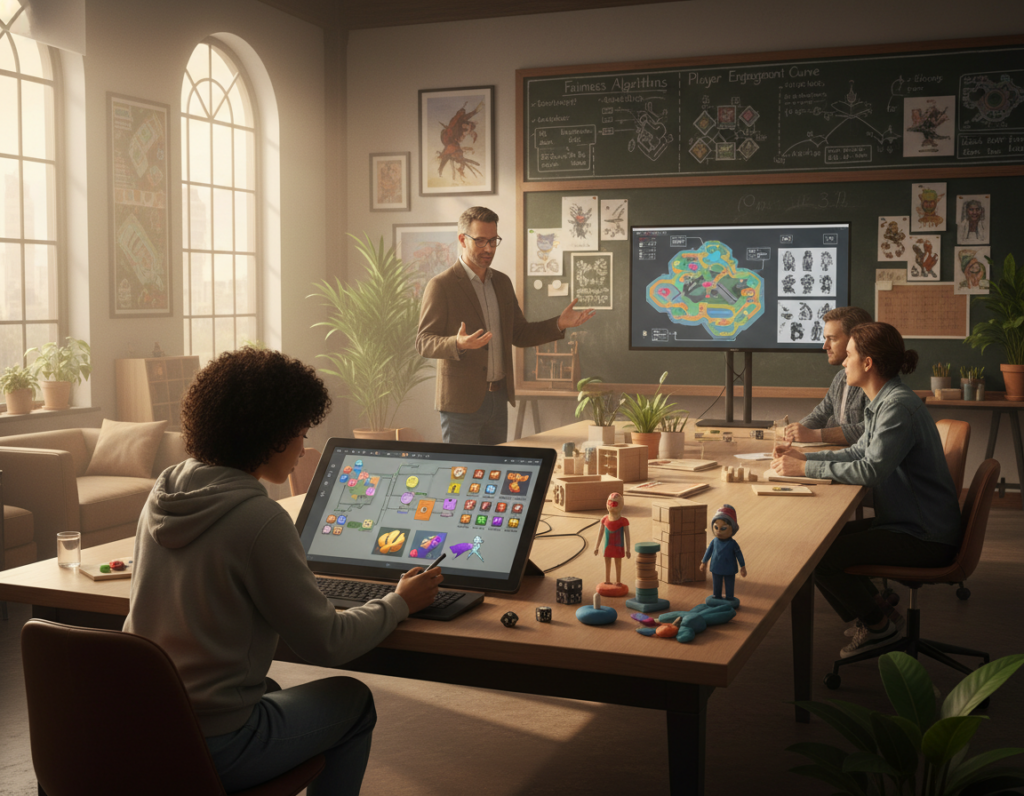
Playtesting reveals the gaps between intention and actual player behavior. It is the step that turns assumptions into concrete fixes and helps teams make better choices about rules, mechanics, and characters.
Preparing Your Documentation
Before a session, provide concise instructions and a short rule sheet. Clear docs help players start fast and reduce wasted time.
Include objectives, a brief list of controls, and a single page of known issues. This keeps feedback focused on the right things.
Selecting the Right Group
Invite a mix of familiar and unfamiliar people to get honest reactions. Others will reveal problems the team missed and highlight level flow issues.
Creating a Comfortable Environment
Comfort matters. Flying NightBear Games found that snacks and a relaxed room help players open up.
Ask questions during play, note behavior, and always debrief after each session. Regular testing refines the world and readies the experience for public release.
“Feedback is a gift; use it to make your work stronger.”
For practical tips on running tests and improving your process, see unlock your process.
Refining Your World Through Feedback
Outside perspectives exposed blind spots and guided practical, high-impact changes. Feedback was a continuous loop that let the team make better choices from real play. They treated each report as data, not judgment.
Maintaining an open mindset helped them see the world from fresh angles. They weighed suggestions, then tested the smallest changes first.
Many creators found the clearest path to improvement by listening to others who had played. This approach turned vague notes into concrete fixes that improved the overall experience.
When implementation stalled, the team prioritized the changes with the biggest impact. That focus kept momentum and raised quality fast.
- Collect focused feedback from varied players.
- Prioritize high-impact fixes before cosmetic tweaks.
- Iterate steadily until the place felt alive and responsive.
“Each round of feedback brought the world closer to its best form.”
For practical methods on testing and refining, consult a concise world-building primer and tips on standing out from branding for creators.
Conclusion
Building a memorable place asks for patience, sharp choices, and listening to the people who play. Teams should focus on the simple rules and the small things that make a game feel alive. Keep testing with real players and treat feedback as useful data.
Work on what makes your world unique and trim what does not help the core loop. Use iteration as a steady way to improve and never stop looking for better methods to build world spaces.
Over time, the best creators balance a clear vision with honest input. That mix helps games stand out and keeps players returning. Use these steps and keep refining.