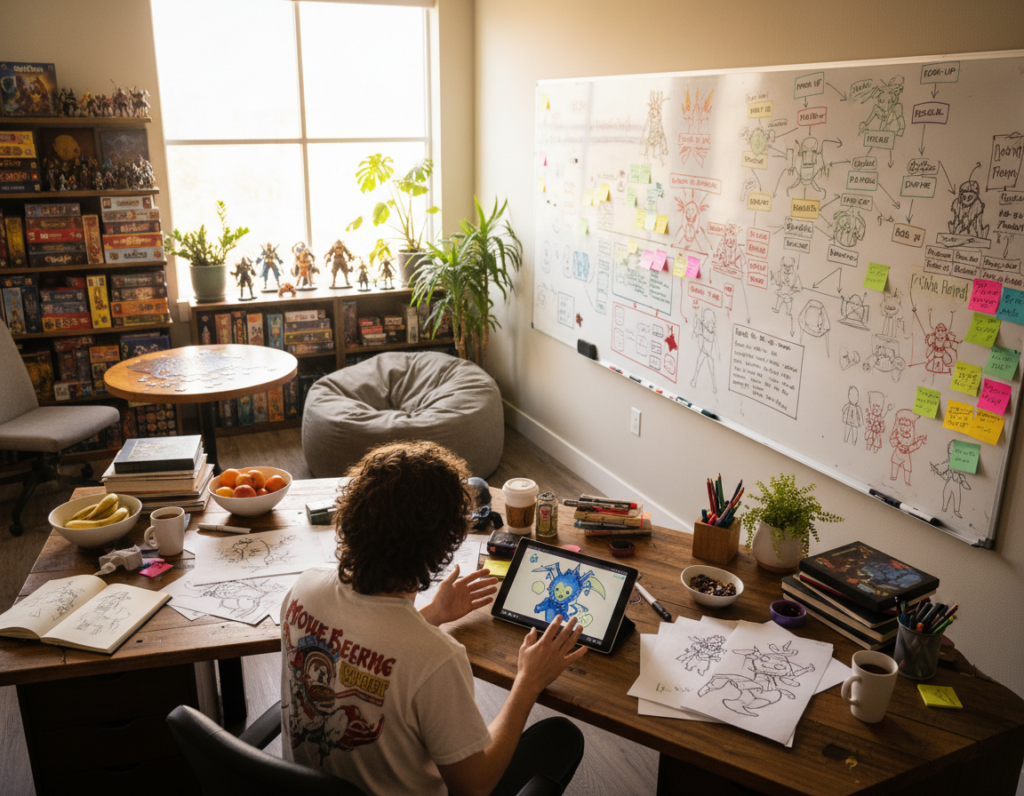
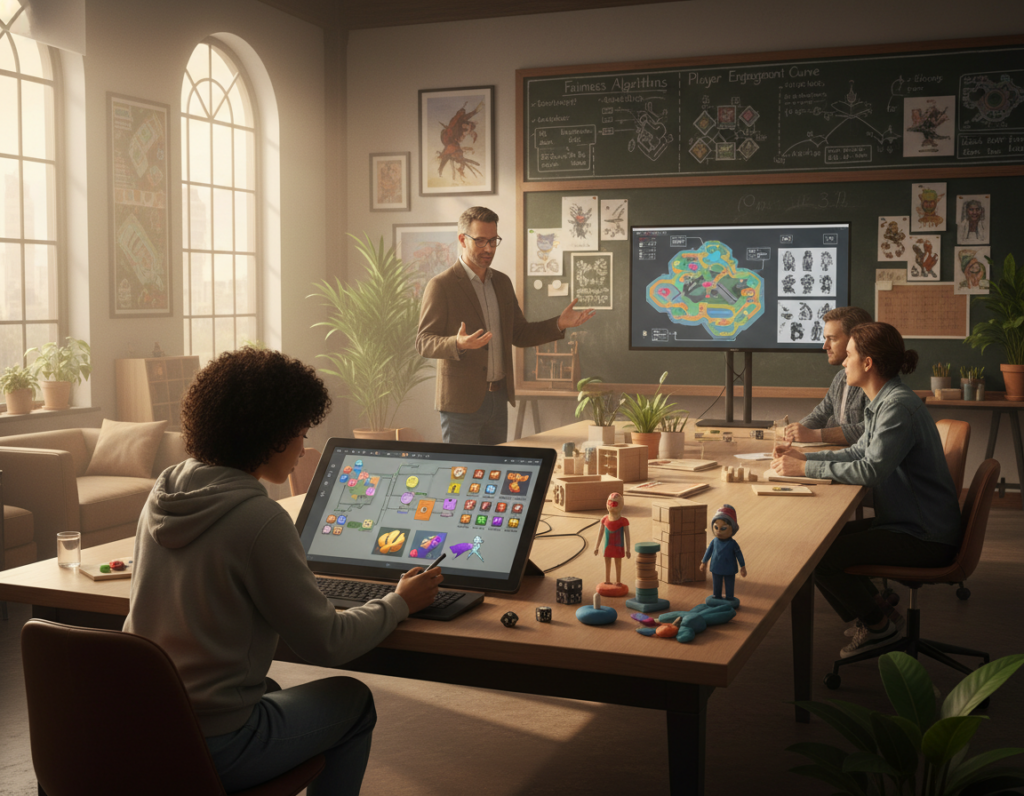
The evolution of digital entertainment has reshaped how teams create every figure that appears on screen.
What began as simple, pixelated icons has grown into complex, hyper-realistic models that drive modern play. Artists and designers blend traditional art skills with new tools to give each figure a striking sense of life.
Each game element now plays a larger role in storytelling and player engagement. Professional creators balance artistic vision with technical limits so models perform well across many systems.
Players expect detail and emotion, and development teams answer with tighter pipelines and refined craft. The result is a richer video game world where memorable figures shape the player experience.
The Evolution of Character Design in Digital Games
From tiny pixels to expressive models, the path of figure creation reflects both tech progress and artistic choice. Early hardware forced creators to simplify shapes and color. Those limits taught valuable lessons about clarity and silhouette.
Iconic examples show how a single palette or motif can define a figure. Pikachu uses bright yellow to signal electric power and become instantly familiar to players. GlaDOS relies on a lone, watchful eye to create tension and presence through minimal means.
Professional artists and designers study these cases to learn what endures. They focus on intent: each visual element must serve story or function. As games advance, expectations rise and teams innovate to meet them.
- Progress moved from limited sprites to complex models.
- Simple choices often yield deep emotional resonance.
- Modern creators build on decades of experimentation.
Effective work blends aesthetics with purpose, so figures resonate beyond mere looks.
Defining the Role of Character Design in Gaming
Visual systems guide how players read and react to every on-screen figure. A clear role statement helps teams align art, systems, and gameplay goals.
Core Principles of Visual Design
Good visual work starts with silhouette, color, and motif. These elements help players spot a game character fast, even during chaos.
Storytelling must be baked into the visuals. Teams fuse narrative cues with practical needs like rigging and animation so each persona moves with purpose.
The Importance of Silhouette
Silhouette is the first signal players use to identify role and intent. It supports quick recognition across systems and resolutions.
- Consistency: Teams keep a unified style so heroes and villains feel part of the same world.
- Function: Rigging and animation inform how a figure performs during gameplay.
- Balance: Artists must reconcile aesthetic goals with development limits and player needs.
Practical insights from successful projects show that well-defined visuals boost immersion and player recall. For deeper strategic context, see mastering game brand success.
Establishing Archetypes and Backstories
Archetypes and origin stories give form to a cast before artists sketch a single line.
Using the 12 common archetypes—Innocent, Everyman, Hero, Outlaw, Explorer, Creator, Ruler, Magician, Lover, Caregiver, Jester, Sage—helps teams narrow focus on role and tone.
A strong backstory supplies context that guides visual choices. When a persona has a clear motivation, players connect during crucial moments of gameplay.
“A well-told past informs every scar, outfit, and motion.”
- Start with a concise character concept to set role and scope.
- Match visual cues to history so art supports narrative truth.
- Lock archetypes early to craft a balanced cast that complements the game world.
Professional artists and designers move concepts from sketch to final model while keeping the player front of mind. This early groundwork makes game character design feel familiar yet fresh.
The Creative Process of Visual Storytelling
Research often anchors a visual concept, turning vague ideas into believable forms that players accept at a glance.
Visual storytelling begins before any sketch. Teams gather photos, motion studies, and cultural references to guide a consistent style.
Researching and Collecting References
The 1994 film The Lion King shows how study matters. Artists observed savanna animals to match anatomy and motion. That same attention helps game teams craft a strong character concept.
Practical steps concept artists follow:
- Collect real-world photos and short video clips for pose and gait.
- Map anatomy and proportions to the intended role and style.
- Test quick sketches to see which ideas read clearly at gameplay scale.
Professional character designers then refine the best ideas. They plan rigging and animation early so the final model moves with life and purpose.
“Good reference turns concept into believable action.”
Iteration lets artists and designers explore options before locking a final look for development.
Balancing Artistic Vision with Technical Constraints
Modern teams must marry bold artistic goals with strict technical limits to ship great game assets. A strong plan helps preserve intent while meeting performance targets.
Technical artists work closely with concept artists and engineers. They set polygon budgets, optimize textures, and plan rigging so each model fits engine limits.
The visual plan must respect memory, CPU, and animation systems. If an asset hurts gameplay or framerate, the whole project suffers.
- Establish rules early to keep art and systems aligned.
- Integrate constraints into the workflow, not as an afterthought.
- Foster collaboration between artists and developers for practical trade-offs.
“Successful work makes stunning models that run smoothly on all target platforms.”
When teams treat optimization as part of the creative process, the final game character becomes a high-quality asset that enhances the video game. This balance is essential for modern game development success.
The Critical Role of Technical Art in Development
Technical artists translate creative intent into efficient, playable assets that meet engineering limits.
Bridging art and engineering keeps visuals true to the original concept while meeting runtime needs.
Bridging Art and Engineering
Technical staff build tools and pipelines that let artists iterate faster. This work saves time and preserves visual intent.
Managing Memory and Performance
Proper optimization matters. Technical artists can make each video game character up to five times more efficient.
Teams like Innovecs Games boosted UI animation output by over 200 percent using specialized scripts.
Ensuring Consistency Across Platforms
Cross-platform rules ensure uniform behavior on different hardware. Every model must be tuned so the player gets a seamless experience.
- Efficiency: Tooling reduces iteration time and runtime cost.
- Rigging & animation: Early planning keeps motion faithful to the concept.
- Platform parity: Tests and fallbacks protect gameplay quality.
For practical workflows that help artists and developers collaborate, see unlock your game design potential.
Optimizing Performance for Mobile and Multiplayer Experiences
Keeping frame rates steady on phones and across networks requires thoughtful asset choices.
Technical artists must manage rigging and animation with strict budgets so a single model runs well on low-power devices.
Every game character also needs network-aware rules to avoid sync drift during fast matches. Teams limit bone counts, reduce texture layers, and favor compact animation clips.
The time spent refining assets pays back through smoother gameplay and happier players.
- Trim polygons and merge meshes where visual cost is low.
- Use baked animation and root motion to lower runtime load.
- Plan fallbacks for lower tiers so experience remains consistent across devices.
“Optimization is not a compromise; it is part of the creative process.”
Professional artists and designers collaborate on these trade-offs so quality stays high while the game remains responsive. For practical mobile tips, review mobile optimization strategies.
Bringing Characters to Life Through Animation and Physics
Animation and physics let a model respond to the game world with believable weight and timing.
Refining facial expressions and body language is crucial for clear visual storytelling. Small shifts in a face or a shoulder tell the player what the persona feels and wants.
Refining Facial Expressions and Body Language
Animators use motion capture, keyframe craft, and blendshapes to build a wide emotional range. Rigging gives the bones and controls that let artists push subtle poses.
- Techniques: mocap, hand-keyed timing, and corrective shapes.
- Physics: procedural motion and soft-body rules add weight and response.
- Collaboration: artists and designers tune moves so storytelling stays true during gameplay.
High-quality animation supports every part of the concept so the player’s experience feels cohesive. When movement and systems align, the figure gains life and the game world feels reactive.
“Movement is where static art becomes believable presence.”
Leveraging Modern Tools and AI in Design
Contemporary pipelines pair automation with human craft to expand the visual range teams can explore. This blend lets artists test new styles and concept art quickly.
AI-assisted workflows speed iteration on a video game character and on broader game art. They reduce repetitive tasks so concept artists focus on the creative choices that matter.
Advanced software also improves rigging and animation. Automated retargeting and procedural rigs let teams craft complex facial expressions and fluid body motion with less manual setup.
Professional character designers and concept artists adopt AI without losing the human touch. They use the tools to refine detail, then apply artistic judgement to keep models emotionally true to the story.
- Faster iteration: More options explored early in the workflow.
- Higher precision: Detailed assets that meet performance targets.
- Better focus: Artists spend time on creative work, not chores.
“When automation handles routine work, players benefit from richer, more expressive game characters.”
The Future of Character Creation
A new era will see AI handle routine tasks while artists set intent and emotional goals.
Teams will blend automated systems with human judgement to speed workflows and raise quality. This hybrid approach cuts the time needed to bring a model to life.
Facial expressions and subtle motion will gain greater focus. Better facial systems let players read emotion at a glance and deepen player attachment.
Practical benefits include faster iteration and more complex worlds. Concept art and advanced animation will remain central as artists curate outcomes and guide AI toward narrative aims.
- AI automates routine tasks, freeing artists to explore intent and story.
- Shorter production cycles create room for richer game worlds.
- Teams keep pushing technical limits to deliver unforgettable characters.
Insight: by embracing new tools, development teams ensure every game character keeps a lasting role in the player journey.
Conclusion
Today’s pipelines turn intent and emotion into assets that run smoothly across platforms.
The evolution of character design has changed how players meet stories and worlds. Through careful use of animation and technical art, teams push what is possible for a modern video game.
Artists and developers will keep collaborating to refine motion, performance, and emotional truth. Players can expect more immersive, emotionally rich characters as tools improve.
Ultimately, the craft is about bringing stories to life so every person feels a genuine connection during play.