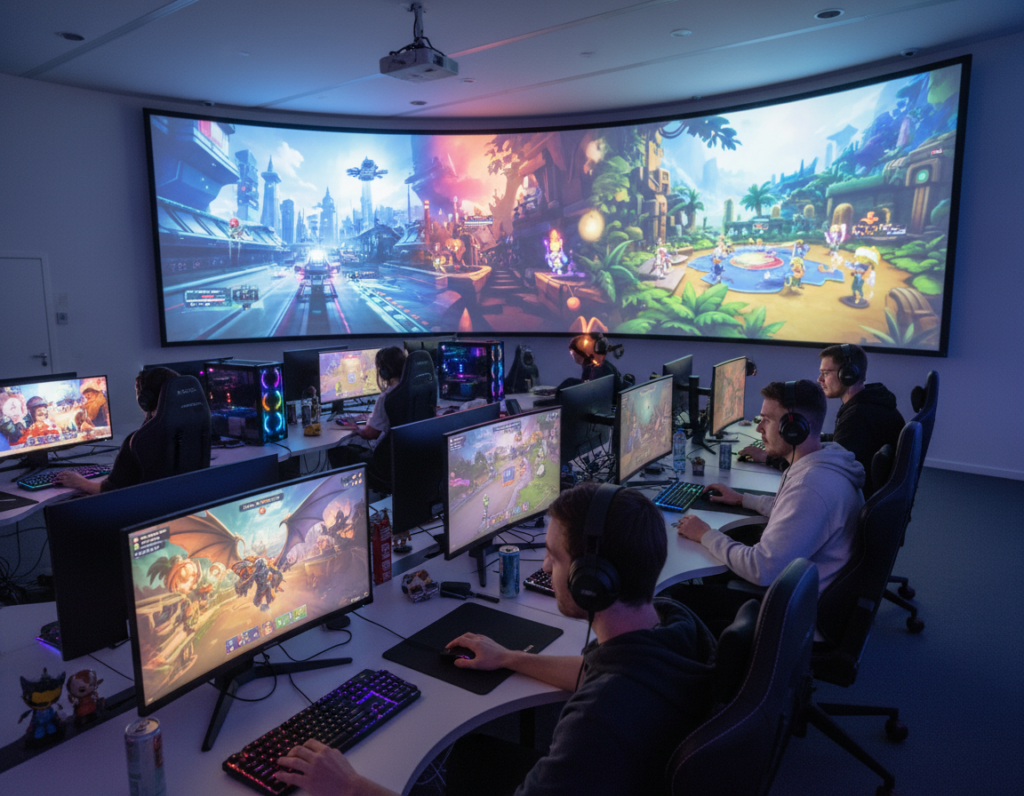
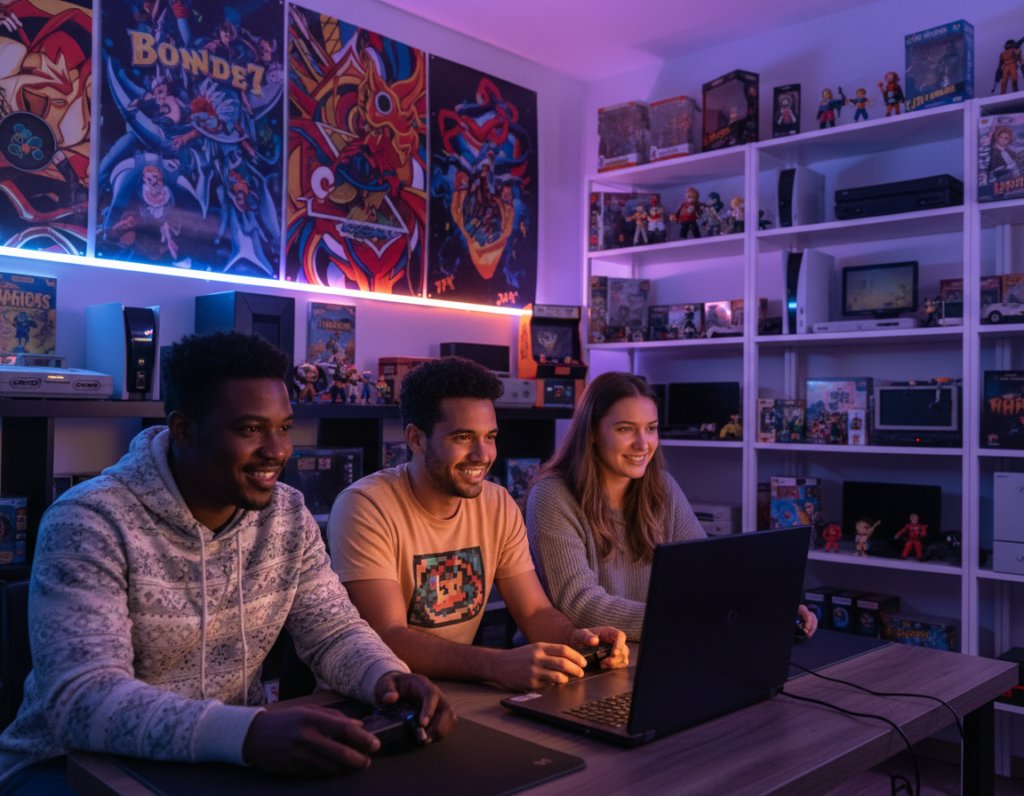
In 2020, about 2.6 billion people worldwide played video games for entertainment and social interaction. This modern landscape shows how gaming can shape professional skills and group behavior.
The digital space gives players a chance to practice communication and strategic thinking. As a result, teams develop clear roles and shared goals that mirror workplace demands.
These activities create a collaborative environment where each player refines decision-making and problem-solving skills. That shared practice builds a strong sense of purpose that many offices struggle to recreate.
Effective communication remains the cornerstone of success. When a team uses game-based strategies, they align faster, adapt quicker, and bring those lessons back to everyday work.
Organizations now recognize that thoughtful gaming experiences can boost performance, morale, and long-term objectives across diverse teams.
The Role of Teamwork in Multiplayer Games
Groups that play digital titles together often learn to coordinate faster under pressure. Research shows that a team that plays video games together is more productive than one that avoids these interactive experiences. This transfer of practice helps employees tackle real work tasks with better timing and clarity.
Players must contribute unique strengths and follow a shared strategy to achieve common goals. When team members work together in a virtual environment, they build relationships and a social sense that supports complex problem solving.
- Shared strategy reduces isolated action during critical moments.
- Regular play improves coordination and measurable performance levels.
- Managers who support these activities often see stronger results under pressure.
For a deeper look at productivity gains from group play, see a relevant study on team performance — research on group play productivity.
“Collaborative gameplay mirrors project work by aligning roles, timing, and goal focus.”
Enhancing Communication and Coordination
Precise messages and shared cues help people act together without hesitation. That clarity matters for any group trying to solve tasks under time pressure.
Clear Communication Strategies
Clear, short calls reduce confusion and speed decisions. A 97% majority of executives say alignment is critical, yet 86% of employees point to poor communication as the source of failures.
Simple protocols—naming targets, confirming receipt, and using agreed signals—cut mistakes. In multiplayer games, this same structure becomes the power that drives success.
Role Assignment and Responsibility
Assigning a clear role helps each team member know when to act and when to support others. This practice builds respect and a stronger sense of shared purpose.
- Defined roles speed real-time coordination.
- Practice in a low-stakes environment boosts employee skills.
- Members learn to navigate relationships and accept responsibility.
“Clear communication is the power that drives success.”
Strategic Thinking and Problem Solving
Quick risk assessment and fast choices shape how players solve layered problems under pressure.
Successful gamers constantly weigh risk, reward, and timing. That mindset maps directly to a modern work strategy.
Adapting to Dynamic Challenges
When a team faces shifting threats, members adapt tactics to reach a common goal. This mirrors how teams adjust priorities on a short deadline.
These activities teach employees to prioritize tasks and manage time even with incomplete data. Players learn to pivot without losing momentum.
- Assess risks quickly and act.
- Anticipate obstacles several moves ahead.
- Share roles so members focus on clear objectives.
“Strategic thinking grows when teams treat each challenge as a chance to refine their plan.”
Over time, gameplay builds a sense of control and a growth mind. That confidence helps teams convert analysis into victory at higher levels of work.
Building Trust and Social Cohesion
Cooperative sessions give colleagues a low-risk place to practice relying on one another. This environment encourages open communication and quick feedback, which builds real trust.
When employees work together to achieve common goals, they learn to value each player’s unique role. That respect shows up as steadier collaboration during tight deadlines.
These multiplayer experiences create a safe space for celebration and recovery. Teams celebrate small wins, which strengthens relationships and improves morale.
- Interdependence: Cooperative gameplay compels team members to rely on each other.
- Practical trust: Employees practice mutual support before trying high-stakes situations at work.
- Open communication: Social cohesion keeps channels clear even when pressures rise.
“By relying on one another during play, members learn to trust each other’s judgment.”
Over time, these patterns of play and communication translate into stronger collaboration back at the office. Players who celebrate wins together carry a shared sense of purpose into daily work.
Leveraging Gamification for Professional Development
Well-designed play modules let teams rehearse roles and test strategies safely. These sessions create a low-risk environment where players practice key skills that matter at work.
Implementing Game-Based Training
Start small: run 30–45 minute sessions tied to a clear objective. A controlled experiment found that teams who played Halo or Rock Band for 45 minutes showed significant productivity gains (F1=8.760, P=.004).
Measuring Team Performance
Use objective metrics to track progress. Scorecards, time-to-complete tasks, and role-based assessments reveal how strategies affect results.
- Study insight: a 444-participant study validated that team video gaming helps newly formed teams develop faster.
- Collect data on communication, task completion, and decision time.
- Compare baseline and post-session performance for clear benefits.
Fostering Continuous Learning
By leveraging the power of gamification, organizations create a culture where each player feels motivated to improve.
Managers can assign roles that match strengths and use replay reviews to teach better strategies.
“These exercises help identify unique strengths, turning practice into measurable improvements.”
Conclusion
Short, goal-driven play sessions can turn casual interaction into measurable professional skills. Integrating team-based games at work offers a low-risk way for a team to practice clear roles, quick decisions, and steady communication. This approach boosts collaboration and builds trust among players.
Organizations that encourage regular play see practical gains: better strategic thinking, faster problem-solving, and stronger workplace bonds. Each player gains experience that supports real projects and long-term success. Embracing these methods helps teams stay adaptable, resilient, and ready to meet ambitious goals.