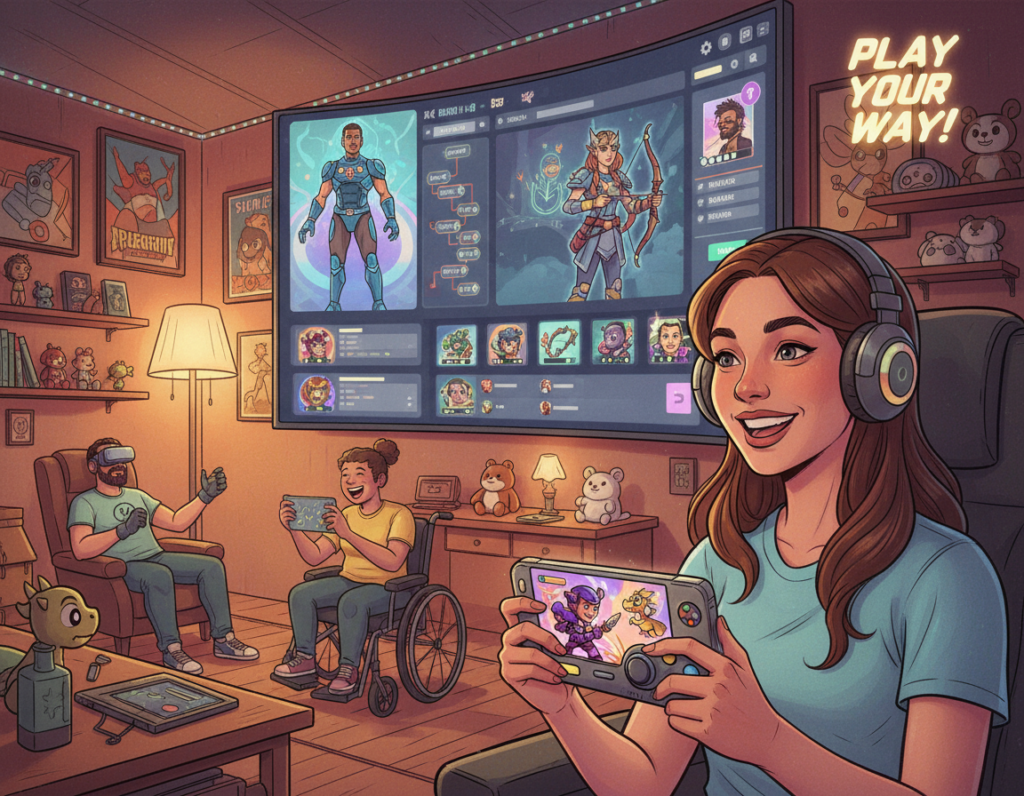
Effective onboarding began with clear goals and simple steps. It guided new players through the basics without overwhelming them. A well-made tutorial section helped users learn core mechanics by showing one thing at a time.
Designers focused on sequence and pacing so each lesson felt rewarding. They limited options early and unlocked systems as the player proved understanding. This approach turned a steep learning curve into an approachable experience.
For practical advice, many teams followed established advice like the important tips for effective tutorial. Those notes emphasized testing, using small challenges, and measuring learning at the end of a lesson.
In short, a compact, friendly intro set the tone. It let players learn at their own pace, build confidence, and enjoy the rest of the world.
The Importance of Effective Game Tutorial Design
When new players encounter complex systems, a clear first run changes confusion into curiosity.
Effective onboarding guides players step by step so they make meaningful decisions early. Civilization 5 famously struggled because lacking a structured intro left many feeling lost, especially with deep strategy mechanics noted on 2kgames.com.
The Souls series shows a different approach: an integrated system that teaches by play. That method keeps learning inside the experience instead of forcing a separate tutorial section.
Designers also face information overload. The Last Federation highlighted how too much text can overwhelm new players. Crusader Kings 2 on Steam illustrated the risk of assuming prior knowledge.
“Provide the right guidance at the right time so players avoid the ‘deer in the headlights’ moment.”
To build a solid foundation, the intro should be an integrated system that teaches basics first, then opens advanced strategy. For more about crafting helpful resources, see mastering the art.
- Keep lessons short and action-based.
- Never assume knowledge; build from first principles.
- Make the tutorial part of the experience, not a distraction.
Avoiding Common Pitfalls in Onboarding
Many onboarding failures start with an assumption that every player brings prior knowledge. That single mistake can block access and ruin the first session for new players of a video game.
Assumed prior knowledge creates hidden hurdles. Developers should not expect players to have read manuals or to have played earlier titles. Instead, the onboarding section must teach essentials from first principles.
Assumed Prior Knowledge
Keep instructions action‑based. Short, hands‑on steps beat long text blocks. When a player does an action, they learn faster.
Information Overload
Presenting too many systems at once causes cognitive overload. Break the process into small parts. Limit on‑screen information and reveal advanced options later.
“Assumptions create barriers; clear, paced lessons open the door for continuing play.”
- Focus each section on one core mechanic.
- Replace heavy text with interactive examples.
- Test with real players to spot overload and gaps.
For a practical checklist on modern onboarding pitfalls, see the onboarding guide.
Establishing the Foundation for New Players
A good introduction gives players the tools to make smart decisions from the start. Fallout 3 taught basics by treating the avatar as a baby. That staged approach introduced mechanics as the character grew.
Half‑Life 2 showed how subtle cues can teach everything with four words and an empty can. Small, in‑world lessons like that make learning feel natural.
When a tutorial focuses on core actions, the player gains the knowledge needed to handle later complexity. Clear basics build confidence and reduce frustration.
“Teach essential actions early so choices later feel meaningful.”
- Start with one core mechanic at a time.
- Use the world to demonstrate rules, not walls of text.
- Ensure each part prepares the player for real decisions.
By establishing a firm foundation, developers help players enjoy the video game and stay engaged through harder sections.
Structuring Information for Optimal Learning
A focused flow of information prevents overload and guides players toward mastery. Clear priorities help the player learn core actions first, then layer on complexity.
Prioritizing Core Mechanics
Start with essentials. Offworld Trading Company split systems into chunks that matched player goals. That way, each mechanic felt useful and worth learning.
Sequential Lesson Plans
Plan lessons so each one builds on the last. Dark Souls 3 is a strong example: it teaches movement, then simple attacks, then advanced combat moves.
Sequencing creates a clear path from basics to deeper systems. Players follow the path without guessing what comes next.
Pacing and Spacing
Cuphead showed how a compact level can teach a lot in a short time. Give players enough time to practice each lesson before introducing the next.
“Present information in a logical order so the player masters one skill at a time.”
- Limit on‑screen information to essentials.
- Adapt the pace to the player’s success.
- Focus lessons on actionable tasks that build knowledge.
Integrating Mechanics into the Narrative
Embedding interactions inside the story makes learning feel like a natural discovery. In Deathloop, Dana Nightingale and Arkane Lyon used curated story moments to introduce mechanics so players never felt pulled out of the experience.
Frictional Games took a similar route with Amnesia: The Bunker. Fredrik Olsson embedded instructions into the WWI trench setting so the player learned by living the scene.
When mechanics appear as part of plot action, players understand how systems function without a detached lesson. Tools like grenades or lamps become story items, not checklist objectives.
That approach boosts retention. Players recall how to use mechanics because they link skills to memorable events. The result is an experience that teaches and entertains at the same time.
“Make the tutorial part of the world so players stay immersed from the first moment.”
- Teach through meaningful actions in the story.
- Use characters and scenes to introduce tools naturally.
- Ensure lessons feel like plot progression, not interruptions.
Balancing Guidance with Player Discovery
Good onboarding gives direction without removing the thrill of finding things alone. Baldur’s Gate 3, as Anna Guxens noted, leaves space so players can uncover deep synergies on their own. That kind of freedom turns simple lessons into memorable moments.
Hauntii uses a friendly spirit that guides the player initially, then steps back to encourage independent exploration. That exit creates a sense of achievement when a player solves a challenge by themselves.
Rewarding curiosity encourages exploration. Designers can hide better loot, story fragments, or unusual mechanics in off‑path places. When players find these, they feel rewarded for experimenting.
- Provide clear starting steps, then let players experiment with the mechanics.
- Offer optional hints rather than forced instructions.
- Use small, meaningful rewards to reinforce exploration.
“Teach players how to learn, not just what to do.”
By the end, players should feel confident to explore the world without constant prompts. Balance keeps lessons useful but leaves room for discovery, which makes the entire experience more rewarding and lasting.
Utilizing UI Elements for Clarity
C emphasized approach: A restrained interface reduced noise and spotlighted the single element the player needed to use next.
Clear UI choices let players focus. Deathloop famously greyed out menus so only one control stood out. This guided attention to the exact mechanic being taught.
Visual cues act as a silent guide. Icons, fades, and simple highlights show what to press and when. That reduces long blocks of text and lowers cognitive load.
- Use contrast to highlight the active element.
- Provide immediate feedback when the player succeeds.
- Keep on‑screen information minimal and contextual.
Balance is key: too many prompts become noise, too few leave gaps in knowledge. The best tutorials let the UI teach without stealing the game experience.
“A well-crafted interface is a lesson that teaches while it fades into the background.”
Implementing Testing Protocols
Boss checks such as Ludex Gundyr act as practical gates to confirm a player has learned core mechanics. A single, well‑placed fight shows whether lessons translate into action.
Each lesson should end with a small test. That check proves knowledge and highlights weak points before the player moves to the next level.
Developers must watch real players. Observing sessions uncovers where instruction fails, what bits of information confuse, and which hints help most. Then they adjust the text, pacing, or the interactive point of the lesson.
“Testing is the only reliable way to ensure lessons prepare players for real challenges.”
- Run boss or checkpoint trials to verify mechanics work in context.
- Include short, actionable tests at the end of each lesson.
- Iterate from player feedback to make lessons accessible to all players.
A well-tested tutorial gives a clear path through the world and leaves the player ready for harder challenges.
Refining Systems Based on Player Feedback
Direct player input exposed the high-friction steps in the opening lessons. Teams used playtests and surveys to spot where newcomers stalled or guessed wrong.
Real examples matter. Baldur’s Gate 3 underwent many tweaks after player trials showed confusing moments. Institutions like the Digipen Institute of Technology helped designers adopt proven testing methods.
The refinement process is ongoing. Developers solicit feedback, watch sessions, and iterate. Each cycle reduces a specific challenge and improves learning outcomes.
- Run short playtests with diverse players.
- Track where users fail and why.
- Prioritize fixes that boost clarity and flow.
A well-polished tutorial section comes from many small changes guided by real players. Designers who listen can turn early confusion into confident, independent play.
“Listen to players, then iterate until interaction feels natural.”
Preparing Players for Independent Play
A strong closing lesson hands players the tools and confidence to continue on their own. At the end of the tutorial, the player should know the core mechanics well enough to navigate the world without constant prompts.
A good final section tied practice to purpose. It gave short, practical tasks that reflected real challenges in the main campaign. This approach respected the player’s time and rewarded steady learning.
Developers focused on player needs by smoothing the transition from guided steps to open play. The process celebrated small wins and then released control, so the player felt capable rather than abandoned.
- Check competence: include a brief, meaningful trial at the end.
- Offer optional help: hints that fade with successful attempts.
- Seal the handoff: ensure the first free segment is forgiving and clear.
“A successful tutorial eventually lets the player go and trusts them to use what they learned.”
When this part worked, players moved into the rest of the games world confident and curious. That confident transition was a big part of a lasting, enjoyable video experience.
Conclusion
Strong, a concise wrap-up turned practice into confident, independent play. Mastering game tutorial design was a critical step to ensure a positive onboarding for new users. The best approaches balanced clear guidance with room for discovery.
Testing and feedback refined weak spots and proved which lessons worked in real sessions. Teams that studied past successes shaped lessons that taught mechanics while keeping immersion intact. In the end, a well-crafted close showed players the developer cared about their experience and wanted them to succeed.